The 12 principles
The twelve design principles permaculture works by, explained in plain language with examples from real farms and gardens.
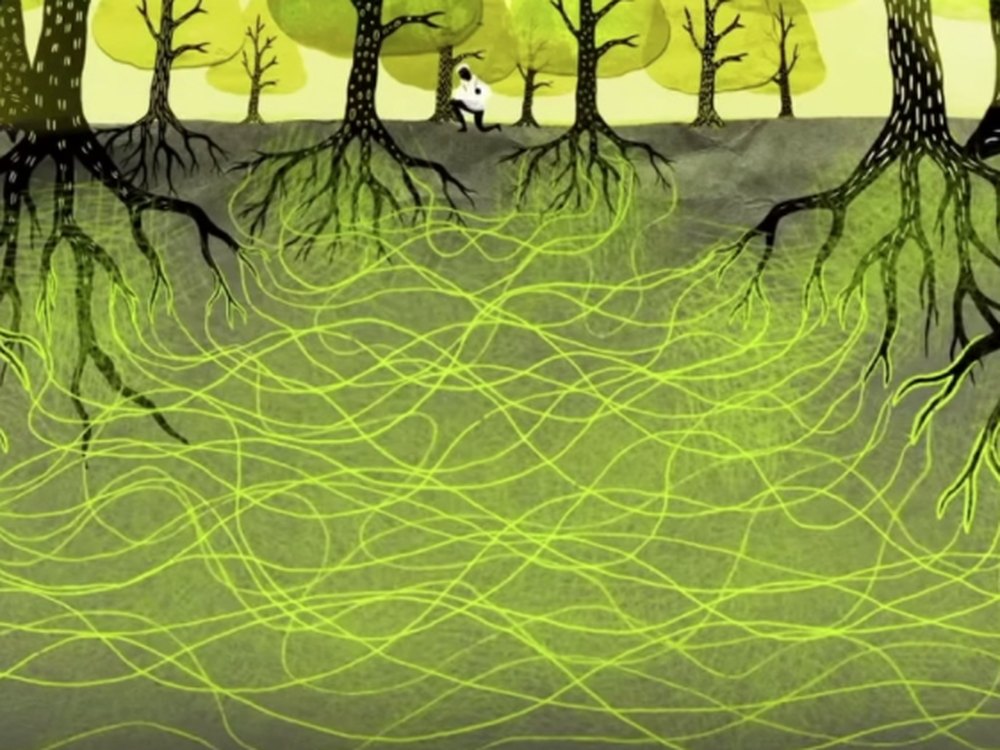
The twelve principles are the working rules of permaculture design, and they apply everywhere. They also explain why permaculture can look complicated from the outside: nature is complex, no plant or animal can stand alone, and every living thing lives in symbiosis with others. The principles are not a checklist to be ticked once and filed away. A good design answers several of them at the same time, and a fair number of them will work by themselves if you stay inside nature's biological cycle, use only the opportunities nature offers, and allow it the time it needs.
Observe and interact
A permaculture project begins with a zone plan, and a zone plan begins with observation: wind, sun, temperature, rain, water flow and soil. The aim is growth conditions that last, found by observing and then interacting with what is there. Observation also settles what to plant. We choose from our best knowledge and are often guessing; nature always picks the best adapted. So plant a mixture of fruit trees of different families and forms, then let nature choose the ones doing well, and a self-sustaining pattern of plant guilds appears from the start. Weeds are nature's answers: whatever grows by itself is adapted to the place, so it tells you what useful plants could grow there.
Capture and store energy
The most important way to capture and store energy is photosynthesis, the carbon cycle, and the most effective way to do it is to grow multipurpose plants everywhere. Horizontal water channels catch water and energy; the overflow is held in dams and fish ponds and reused for irrigation, with nutrients, across the project. Energy is stored in the biological cycle as living and dead biomass. The main goal of a design is to capture and store as much energy as possible in as many ways as possible. Green technologies add their own share: solar heat and electricity, wind power, gravity-fed water, and a mass oven heated for half an hour that releases heat all day.
Obtain a yield
In permaculture everything starts with the soil microorganisms: bacteria, algae, fungi, protozoa, nematodes. Then come the visible worms and insects, then small vertebrates, then plants and animals. Every creature in the food chain lives in symbiosis with the others. Plants keep beneficial microorganisms alive by feeding them energy and receive nutrients and a biological self-defence in return. This is why crops do not grow on square metres of surface but in cubic metres of soil, as deep as the food chain can reach. Yield comes from stacking the layers: seven to nine productive layers of trees, shrubs, herbs and annuals, with deep roots and shallow ones, so that plants do not compete for the same nutrients.
Apply self-regulation and accept feedback
A project also asks you to adapt your life to it. Much of the work is cutting down and living on what you produce, which is healthy food. Sharing and barter carry the surplus: if a sow gives 14 piglets instead of the eight expected, they can be exchanged for apples, potatoes or whatever is missing. Expect good years and bad ones; an oak does not bear heavily every autumn. In a heavy year, harvest, store and exchange. Never push one element. If the cycle on a farm works with two pigs, it will not carry four, even if a neighbour offers 1000 USD for each, because that is not adding two pigs but doubling the influence of pigs.
Use and value renewable resources
One man's waste is another man's gold. In countries where good things are thrown out, reuse stores and free websites can furnish and even build a house, if you are willing to collect the material and take it down yourself. Most projects aim at self-sufficiency, and solar and wind carry most summer days. Winter is the test. A Dane uses about 3,000 kWh a year, two thirds of it in the winter months and half of it in January and February alone, so a battery bank large enough to carry a household through those two months would be very expensive. Insulation, passive heating, rocket stoves and a biogas plant fed with manure and biological waste do more.
Produce no waste
Absolutely zero waste can only mean that a project always uses biological regenerative methods and products, inside nature's cycle: repair and recycling instead of throwing out, a longer life for everything, renewable energy in place of fossil fuels. Renewable energy can replace fossil fuels and even firewood, but it is a big challenge, and vehicles running only on sun, wind and biogas have limits. The main move is to reduce the need for fuel, and to reuse and extend the life of materials. A project should be managed as a closed biological cycle, with no external input and no waste, only new products. As they say in India, the first harvest from a cow is manure.
Design from patterns to details
A project is about reading and understanding patterns in the landscape, then designing the most productive solution the landscape offers. One worked example sits at latitude 55.9, on a quarter of a hill sloping north-east, with an old house, a workshop and old oaks. Rain runs from a dug-out marl hole down to the public road; drainage from the house sends water to the neighbour's field; there are 5 metres of height difference. The prevailing wind is westerly and the cold winter wind north-easterly, and a 10 to 15 metre forest shades the upper southern part, so winter sun is scarce. The soil runs from clay to stony sand, pH 5.5 to 7.0. The problem is the solution.
Integrate rather than segregate
Leif's first design was made in the Kalahari in 1985: an integrated farming system that recycled water and nutrients and produced fruit, vegetables, fish, milk and poultry in a single agricultural unit. Nobody understood what he was talking about, and the funding never came. Only a small part was established, with cows, vegetables and chickens around a biogas plant, but the idea was sound: animal and plant units in an integrated circle, each supporting the others biologically, for a higher total production. In nature, 1+1=3 if things are done in the right way. Integration includes people too, through open projects where visitors can see, touch, make and taste, through open days on farms, and through fairs, associations and the internet.
Use small and slow solutions
Small and slow means a sustainable plan for many years ahead, and as many crops as possible in one area. Fertility is built by planting trees and starting a succession that raises humus, organic matter and biology in a root zone three to four times deeper. The first years give few edible crops, but the slow solution is about building fertility and finding the right plants, with time to enjoy the work. Keep the soil covered with living plants all year, mostly annual cover crops in the first year. Many herbs cut the work, deepen the root zone and can remove the need to water. Go for the low-hanging fruit: if a plant looks suited to a spot, try it.
Use and value diversity
Ask "what would nature do?" Nature opens the door so everything gets a chance; any plant that establishes itself may grow and set seed, and new DNA with it. Most seeds fail, a few set seed of their own, and generation after generation they become better attuned to the place. That is natural selection, and how plants spread over most of the planet; a plant that makes 10,000 seeds and yields one better-adapted offspring has succeeded. Farmers' selection over generations gave us our crops and livestock. What suits one crop harms another, so a poor apple year can be a good nut year. Wild apple trees near Leif's place that do well supply seed and cuttings.
Use edges and value the marginal
Find or create the best place for every element. Beehives are put where the bees will be productive, and the same care applies to animals, fish and compost heaps. Marginal zones between elements give perfect growing conditions, and in nature there is no blank space: plants and animals are everywhere. Where there is winter wind and more than 15 hours of summer sun, that is the place for wind turbines, solar cells, a solar greenhouse, garden frames and sun-loving plants, because it is the best position for them. A fish pond with extended edges multiplies the most fertile margin there is, the strip between water and soil. Growing in layers does the same for the plants that want forest shade.
Creatively use and respond to change
Treat any farm as a counterfactual: what if I had done this, should I try that, what if it rains too much? The questions run on endlessly, and answering them is what adapting means. A project moves year after year towards more productive, self-sustaining conditions. It starts with horizontal channels, hugelbeds and fast-growing nitrogen-fixing and productive annuals to improve the soil, and ends with many food-productive elements arranged like a natural forest. Fast-growing nitrogen-fixing perennials, shrubs and trees are cut and thrown, or coppiced, to expand the root zone. Compost and compost tea restore the microbial balance. Empty places get used, unwanted plants and animals are competed out by beneficial ones, and niche productions appear as the succession moves on.
The twelve principles are a lot to hold at once, and they are not meant to be applied one at a time. The three ethics underneath them are shorter and just as demanding: care for the earth, care for people and fair share. You can read them in the three ethics. If you would rather walk your own land with someone who has worked this way for forty years, get in touch.
Continue reading
All guides
What is permaculture?
A working definition of permaculture: a food-productive copy of nature's biological cycle, built from soil, plants and animals.
Read the guide
What is regenerative agriculture?
Degenerative, generative and regenerative farming — and why a permanent plant cover changes everything.
Read the guide
Three steps to permaculture
Soil, plants and animals — the three steps that turn a farm or garden into a working biological cycle.
Read the guide